
Hemodynamic Effects of Remimazolam Versus Propofol in Catheter Ablation
Disclaimer: This article is intended solely for informational and educational purposes only. It does not constitute medical advice.
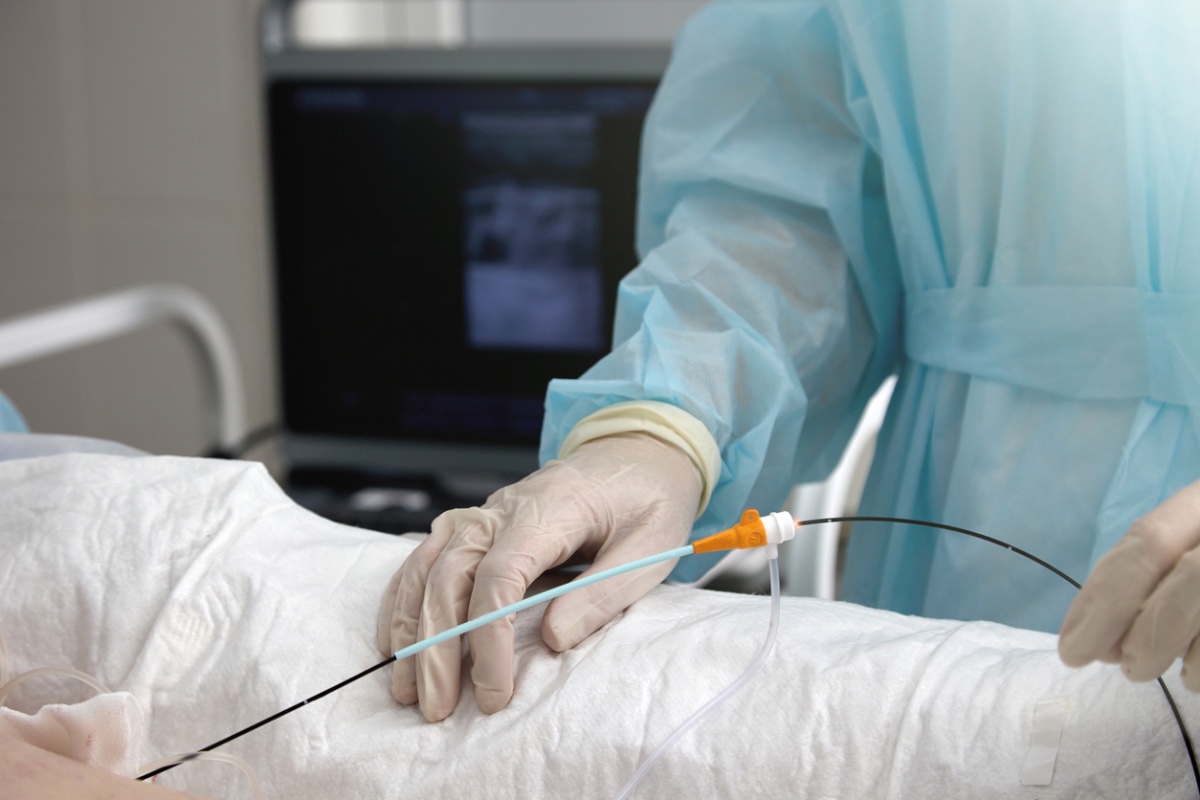
Catheter ablation is a treatment for cardiac arrhythmias that is commonly performed under anesthesia to ensure patient immobility and optimal procedural conditions. However, maintaining hemodynamic stability is challenging because anesthetic agents, in conjunction with procedure-related arrhythmias and underlying cardiovascular disease, can significantly contribute to intraoperative hypotension. Propofol remains the most popular intravenous anesthetic for catheter ablation because of its rapid onset, good safety profile, and widespread availability, but its vasodilatory and other negative effects can result in clinically significant hypotension, especially in patients with existing cardiovascular comorbidities, leading to interest in remimazolam as an alternative.1
Remimazolam has emerged as a promising alternative to propofol in clinical settings within this demographic. It is an ultra-short-acting benzodiazepine that, like propofol, acts on GABAA receptors and can provide adequate anesthesia with rapid induction and recovery times.2 Studies have shown reduced cardiovascular depression and a lower incidence of post-induction hypotension, making remimazolam an attractive anesthetic option compared to propofol in patients with greater hemodynamic concerns, such as those undergoing cardiac catheter ablation.3
A 2026 retrospective cohort study offers the most recent data concerning this topic. It compared 59 adults who underwent catheter ablation under total intravenous general anesthesia between May 2023 and April 2025, 32 of whom received propofol and 27 of whom received remimazolam. Hemodynamic effects were assessed by comparing the duration and severity of intraoperative hypotension (MAP <65 mmHg) and blood pressure trends throughout anesthesia.
The duration and severity of intraoperative hypotension were similar between the remimazolam and propofol groups. The median duration of MAP <65 mmHg was 18.0 minutes in the remimazolam group compared with 19.0 minutes in the propofol group (p = 0.964), and the area under the curve for MAP <65 mmHg also showed no significant difference between groups (p = 0.873). Blood pressure decreased after anesthesia induction in both groups, reaching its lowest point at approximately 30 minutes, with no significant differences in MAP trends. Overall, remimazolam was not associated with a reduction in hypotension duration, suggesting that it did not provide a significant hemodynamic advantage over propofol during catheter ablation.1
Nonetheless, it is worth considering the earlier 2024 meta-analysis which prompted this aforementioned study. This review analyzed 561 randomized controlled trials comparing remimazolam and propofol for general anesthesia in adults. The resulting systematic review ultimately included nine RCTs involving 1,132 patients (678 receiving remimazolam and 454 receiving propofol) across various surgical settings and evaluated the efficacy and safety of both anesthetic agents.
The meta-analysis found that, compared with propofol, remimazolam was associated with a significantly lower incidence of intraoperative hypotension in adults undergoing general anesthesia (RR 0.62, 95% CI 0.50–0.76; n = 9), suggesting improved hemodynamic stability. Remimazolam also reduced the risk of respiratory depression (RR 0.28, 95% CI 0.09–0.82; n = 3) and injection site pain (RR 0.14, 95% CI 0.02–0.94; n = 4), while showing no significant difference in the incidence of bradycardia compared with propofol (RR 0.61, 95% CI 0.36–1.06; n = 4).2 The relative strength of evidence supporting these findings2,4 suggests that remimazolam provides a consistent reduction in intraoperative hypotension and respiratory depression. These results are also consistent with previous meta-analyses, which similarly demonstrated reduced intraoperative hypotension with remimazolam compared with propofol.
Although evidence from broader surgical populations suggests that remimazolam may reduce intraoperative hypotension and respiratory complications compared to propofol, recent data specific to catheter ablation demonstrate no significant improvement in hemodynamic stability compared with propofol. These conflicting findings prompt further research on higher risk cardiovascular populations in larger study groups and on the potential impact of patient characteristics, surgical complexity, and anesthetic management strategies on outcomes.
References
- Sano, S.; Takahashi, K.; Katsuyama, H.; Torii, M.; Iwano, Y.; Yamamoto, Y.; Tsukada, S.; Sento, Y.; Uchida, T. Hemodynamic Effects of Remimazolam Versus Propofol in Catheter Ablation Under General Anesthesia. Journal of Cardiothoracic and Vascular Anesthesia 2026, 40 (7), 2256–2259. https://doi.org/10.1053/j.jvca.2026.03.039
- Muñoz-Carrillo, J. L.; Rodríguez-Cortes, N.; Lévano, S. T.; Moran-Mariños, C.; Barboza, J. J. Remimazolam Versus Propofol in General Anesthesia of Complex Surgery in Critical and Non-Critical Patients: Meta-Analysis of Randomized Trials. Journal of Clinical Medicine 2024, 13 (24), 7791. https://doi.org/10.3390/jcm13247791
- Shimizu, T.; Takasusuki, T.; Yamaguchi, S. Remimazolam Compared to Propofol for Total Intravenous Anesthesia with Remifentanil on the Recovery of Psychomotor Function: A Randomized Controlled Trial. Advances in Therapy 2023, 40 (10), 4395–4404. https://doi.org/10.1007/s12325-023-02615-w
- Yang, L.; Zhang, J.; Xiao, N.; Chen, J.; Liu, H.; He, X.; Xiao, X.; Zhang, F. Clinical Trial Comparing Remimazolam with Propofol During Intravenous Anesthesia: A Prospective Randomised Clinical Trial. Combinatorial Chemistry & High Throughput Screening 2024, 27 (10), 1544–1550. https://doi.org/10.2174/0113862073247219230927050009